


Uncategorised
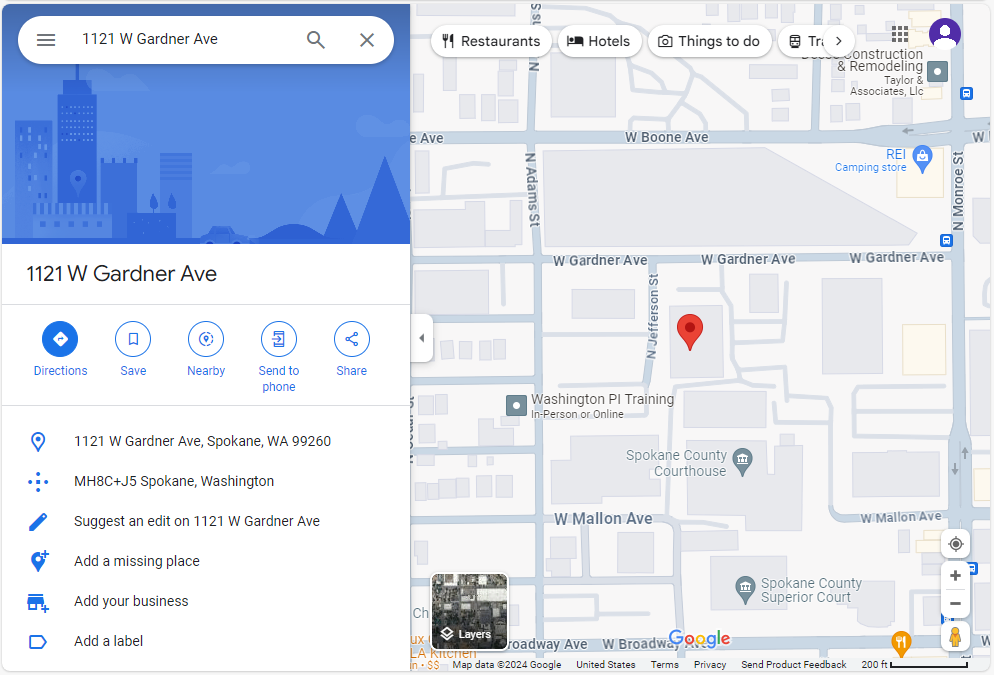
Meeting Location Map
- Details
- Published: 24 September 2017 24 September 2017
- Hits: 7459 7459
The Spokane County ARES - ACS groups meet the Third Thursday of Every month at the Spokane County DEM Building from 7 pm to 9 pm.
How to join Spokane County ARES - RACES - ACS
- Details
- Published: 22 July 2017 22 July 2017
- Hits: 10041 10041
There are two distinct registrations to join Spokane County ARES - RACES - ACS. Although ARES and RACES - ACS are separate organizations with different requirements, they are jointly operated in Spokane County and require an applicant to complete an applications for one or both in order to join.
The first application is for the Spokane County ARES group. This application, when approved, adds you to a roster of Amateur operators who volunteer for various activities. These may be emergency related or other activities such as assisting with communications for Bloomsday or the Spokane Lilac parade. Membership in ARES also requires you to download and print an ARES Task Book, which will track your participation and qualifications.
The second is for the Spokane County RACES - ACS group. This group requires both the ARES application and a second application with Spokane County Emergency Managementt. This second application will go through a security and background check so the Spokane County Department of Emergency Management can call upon you for emergencies and serve in an official capacity. Spokane County ACS uses a separate Task Book given to members to track their qualifications, which include more than what ARES requires.
Interested individuals may be a member in one or both organizations. Even you don't or can't qualify for ACS, our ARES group welcomes you, and you can still volunteer for many events to bring your expertise in Amateur radio operations to our community.
You can download the Spokane County ARES registration form, fill it out and bring to the next Spokane County ARES / RACES meeting or email it to This email address is being protected from spambots. You need JavaScript enabled to view it..
Here is a link to the Spokane County Emergency Management application
Mentor Programs
- Details
- Published: 22 July 2017 22 July 2017
- Hits: 9034 9034
Traffic Handler PDF Document and Audio MP3
Ham Radio Links
- Details
- Published: 22 July 2017 22 July 2017
- Hits: 5787 5787
Inland Empire ARES/RACES Organizations
About the Amateur Radio Emergency Service® (ARES)
National RACES Organization
Spokane County DEM
Washington State ARES/RACES
Chelan/Douglas County ARES
Traffic Handling Tools
Other Ham Radio Related Links
ARRL
ARRL Section Info
Inland Empire VHF Club
National Weather Service (Spokane, WA)
NASA Human Space Flight
Spokane Repeater Group
Courage Kenny Handiham System
Oak Hills Research
FCC Universal Licensing System
QRZ
Software for Hams
The ARES - ACS Email List
- Details
- Published: 22 July 2017 22 July 2017
- Hits: 5316 5316
The ARES - ACS E-Mail list is a list of the ARES - ACS members in the Spokane County ARES - ACS group that have internet access and would like to be notified of activities regarding the activities of the Spokane County ARES - ACS group. This would include Weather related events along with Public Service events and local disaster call outs. It could also include ARRL related information and other Ham related Internet sites.
or
Equipment Lists
- Details
- Published: 22 July 2017 22 July 2017
- Hits: 3767 3767
Personal Comfort / Survival Equipment List
FIVE HOUR KIT
To be used when called out for a short assignment that is local and will not involve an over night stay or a great distance.
- Water/Thermos of coffee or tea.
- Power bars, candy bars, dried/fresh fruit, sandwiches.
- Clothing for weather including rain gear and extra dry clothes.
- Any medication taken.
- First aid kit.
- pad/pencil.
- copy of Amateur Radio License
- toilet tissue
OVER NIGHT KIT
This is an over night kit to be used for a situation involving longer travel and the possibility of no motel or operating from a remote location,
- Sleeping bag, blankets, pillow.
- Tent/ air mattress.
- Ground cloth.
- Extra cloths and rain gear.
- Dried soup.
- 2 to 5 gallons of water.
- Oat meal
- Tea / Coffee / cocoa.
- Dried fruit.
- Power bars
- Fresh fruit.
- Camp stove / fuel.
- Tinder Kit.*
- Mess kit.
- Tarp.
- Pad/ pencels
- Medications .
- First aid kit.
*A tinder kit in a plastic bag;
Several small candles (just cut up a big one).
Lighter/ matches
Small dry sticks.Station Equipment List Spokane County ARES/RACES members are encouraged to maintain station equipment that may be quickly and reliably put to use in emergency situations. Ready VHF and UHF handheld transceivers, versatile UHF, VHF and HF mobile stations and stations for fixed operations on UHF, VHF and HF that may be quickly disassembled, transported and assembled again for use in the field are all necessities for a timely response. Many members dedicate equipment specifically for use in emergency operations. Whatever kind of station equipment members take to an incident response, it must be in good condition and capable of supplying at least 72 hours of continuous service.
Assignment Equipment to be Used Accessories Shadow or Light mobile, UHF and VHF UHF/VHF Handheld Transceiver, mono or dual band capability - Change of batteries and battery charger
- Automobile cigar lighter adapter, fuses
- Replacement fuses
- Headphones
- Extendable gain antenna
- Magnetic mount antenna, mono or dual band
- BNC to UHF antenna adapter
- 10 foot length of RG-58 coaxial cable with UHF connectors
- One UHF barrel connector
- Small paper pad and pencil; message forms
- Flashlight
- Tools for minor repairs
- Interchangeable power connectors on all mobile / portable equipment
- Users guides for all equipment
Mobile UHF and VHF UHF/VHF Transceiver, Mobile Configuration - Automobile cigar lighter adapter, fused
- Replacement fuses for radio and DC line
- Alligator battery post clip leads
- Headphones and/or Outboard speaker
- Magnetic mount antenna, mono or dual band
- 10 foot length of RG-58 coaxial cable with UHF connectors
- UHF barrel connectors
- BNC to UHF for emergency adaptation of Handheld radio
- Clipboard with paper and pencil; message forms
- Flashlight
- Portable AM broadcast receiver
- Tools for minor repairs,
Fixed UHF and VHF UHF/VHF Transceiver, Fixed Station Configuration - Adequate AC power supply or heavy battery with charger
- 25’ and 50’ 14 gauge AC extension cables with fused power strip (possibly with surge suppression).
- Replacement fuses for radio, supply and power strip
- Headphones and/or outboard speaker
- Magnetic mount antenna, mono or dual band
- Gain fixed station antenna, single and/or multi-element
- Mast material for mounting and elevation of antenna
- Guy line materials
- Extension coaxial cable, minimum two 50’ lenths
- One short and flexible RG-58U coaxial cable
- UHF barrel adapters
- BNC to UHF adapter for emergency adaptation of handheld radio to fixed antenna
- Duct tape and electrical tape
- VHF/UHF watt meter or SWR indicator
- Clipboard with paper and pencil; message forms
- Small desk lamp and/or flashlight
- Portable AM broadcast receiver
- Tools for minor repairs
Portable VHF Packet (continued) VHF Transceiver, computer and Terminal Node Controller - Adequate AC power supply or heavy battery with charger
- 25’ and 50’ 14 gauge AC extension cables with fused power strip (possibly with surge suppression).
- Replacement fuses for radio, supply and power strip
- Patch cables from TNC to radio
- Patch cables from computer to TNC
Assignment Equipment to be Used Accessories Portable VHF Packet (continued) - Portable printer with paper, if available
- Headphones and/or outboard speaker
- Magnetic mount antenna, mono or dual band
- Gain fixed station antenna, single and/or multi-element
- Mast material for mounting and elevation of antenna
- Guy line materials
- Extension coaxial cable, minimum two 50’ lengths
- One short and flexible RG-58U coaxial cable
- UHF barrel adapters
- Dual band handheld radio of backup
- BNC to UHF adapter for emergency adaptation of handheld radio to fixed antenna
- Duct tape and electrical tape
- VHF/UHF watt meter or SWR indicator
- Clipboard with paper and pencil; message forms
- Map and compass
- Desk lamp and/or flashlight
- Portable AM broadcast receiver
- Tools for minor repairs
Mobile HF HF Transceiver, Mobile Configuration - Replacement fuses for radio and DC line
- Alligator battery post clip leads
- Headphones and/or outboard speaker
- Permanent or magnetic mount antenna, capable of 80 meter and/or 40 meter operation
- 10 foot extension of RG-58 coaxial cable with UHF connectors
- UHF barrel connectors
- Clipboard with paper and pencil; message forms
- HF Watt meter and/or SWR indicator
- Flashlight
- Portable AM broadcast receiver
- Tools for minor repairs
Fixed HF HF Transceiver, Fixed Configuration - Adequate AC power supply or heavy battery with charger
- 25’ and 50’ 14 gauge AC extension cables with fused power strip (possibly with surge suppression).
- Replacement fuses for radio, supply and power strip
- Headphones and/or outboard speaker
- 80 meter dipole (preferable) with balun or G5RV antenna
- Sling shot or other line-launching device
- Safety flags for improved visibility of aerial lines
- Dummy load
- Antenna tuner
- Grounding wire and short ground rod; sledge hammer
- Minimum 25’ mast material for mounting and elevating antenna
- Medium duty guy line materials
- Extension RG-8 cable, minimum two 50’ lengths
- One short and flexible RG-58U coaxial cable
- UHF barrel adapters
- Duct tape and electrical tape
- HF watt meter or SWR indicator
- Clipboard with paper and pencil; message forms
- For any type of HF data transmission such as pactor, add computer, TNC and special cables connecting the computer to the TNC and the TNC to the radio
- Morse key
- Small desk lamp
- Portable AM broadcast receiver
- Tools for minor repairs including VOM and heavy soldering tools with solder
Created by PA4RM |